A research participant portal that protects participants first
A research registry serves volunteers and researchers. The volunteers come first, and every request for their data goes past people and onto the record.
 Contact
From 2012 to 2023 we designed, built and looked after TwinsUK's research pages, members' site and data access system at King's College London.
The context
TwinsUK is the UK's largest adult twin registry at King's College London. The registry depends on two groups of people. Twins give their time to visits and questionnaires. Researchers apply to use the data and samples those visits produce.
From 2012 to 2023 we designed, built and looked after the web tools for both.
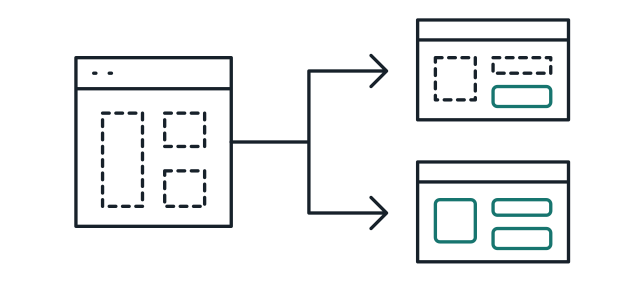
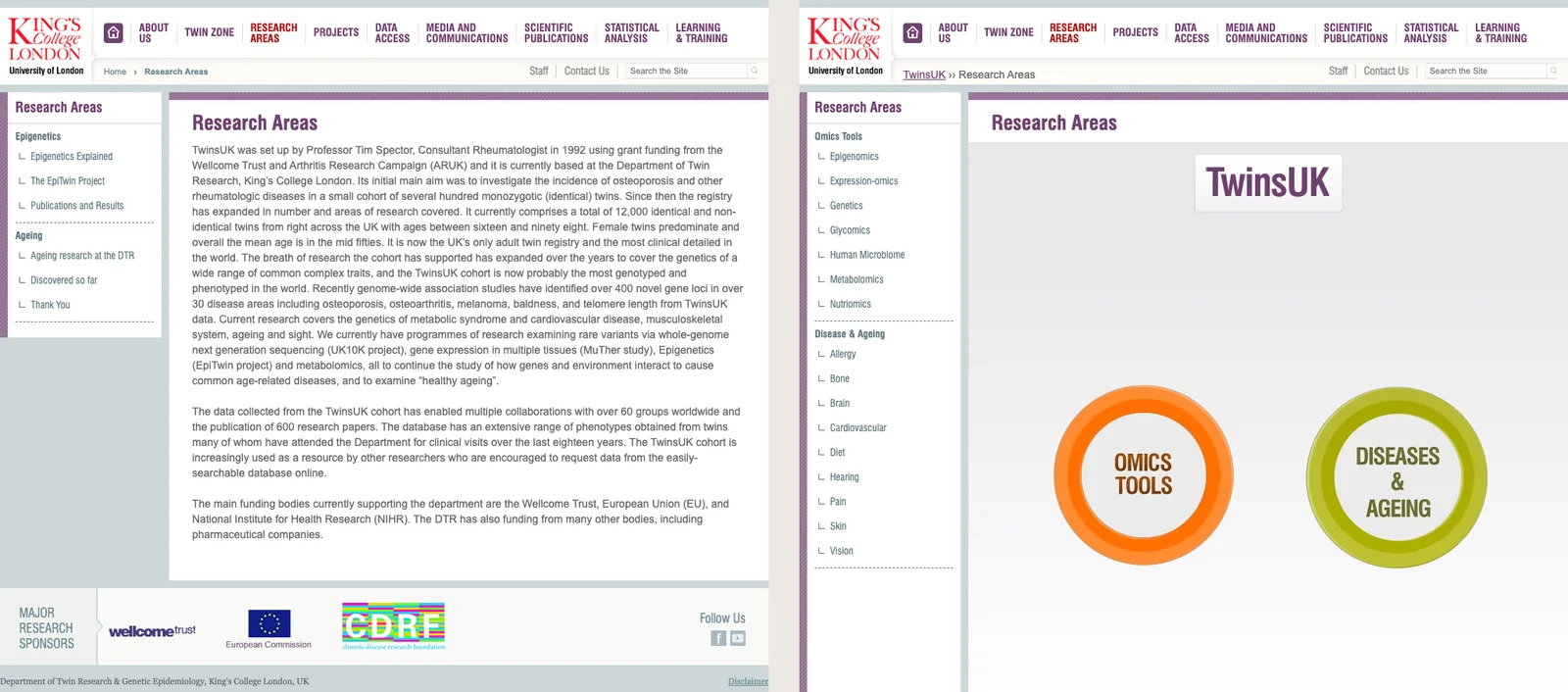
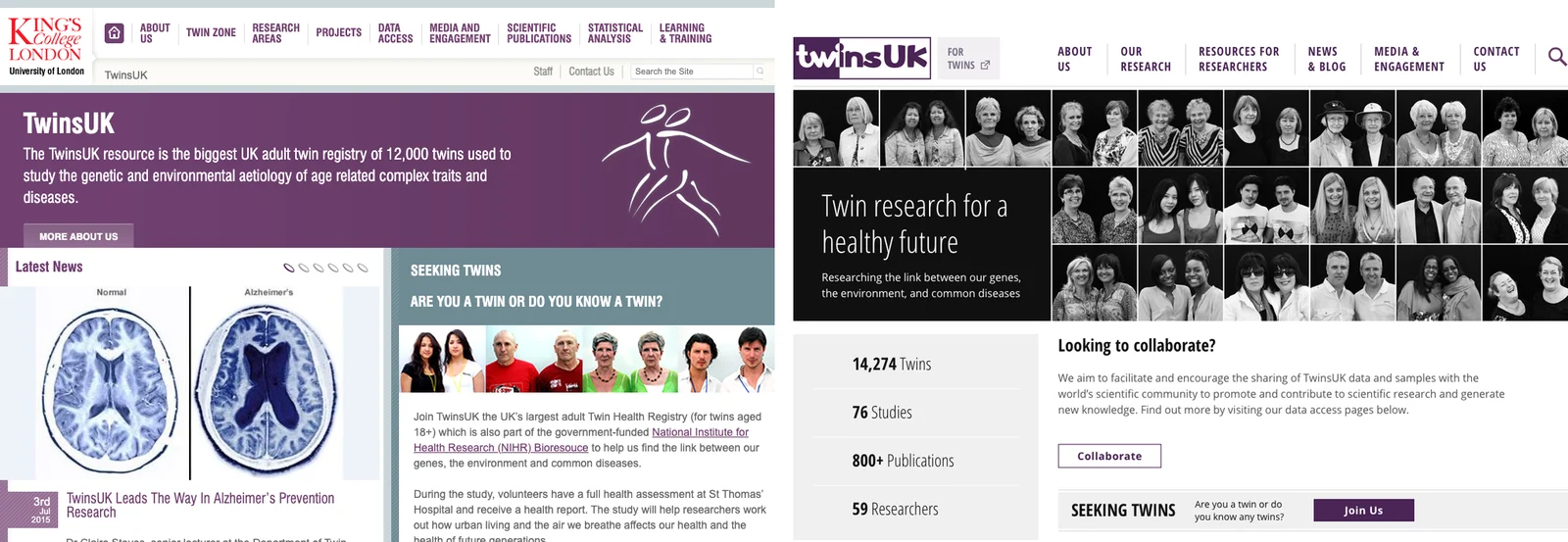
In November 2012 the department had approval to rebuild the research area of its website. The old page was one long block of text. By July 2013 the area opened on an interactive diagram that split the research into omics tools and disease and ageing, with a page for each area behind it.
The twins needed one place to keep their details up to date, answer questionnaires, see what the research found and prepare for a visit to St Thomas' Hospital.
The researchers needed to apply for data without a chain of forms and emails. The registry needed a record of every decision its committee made on those applications.
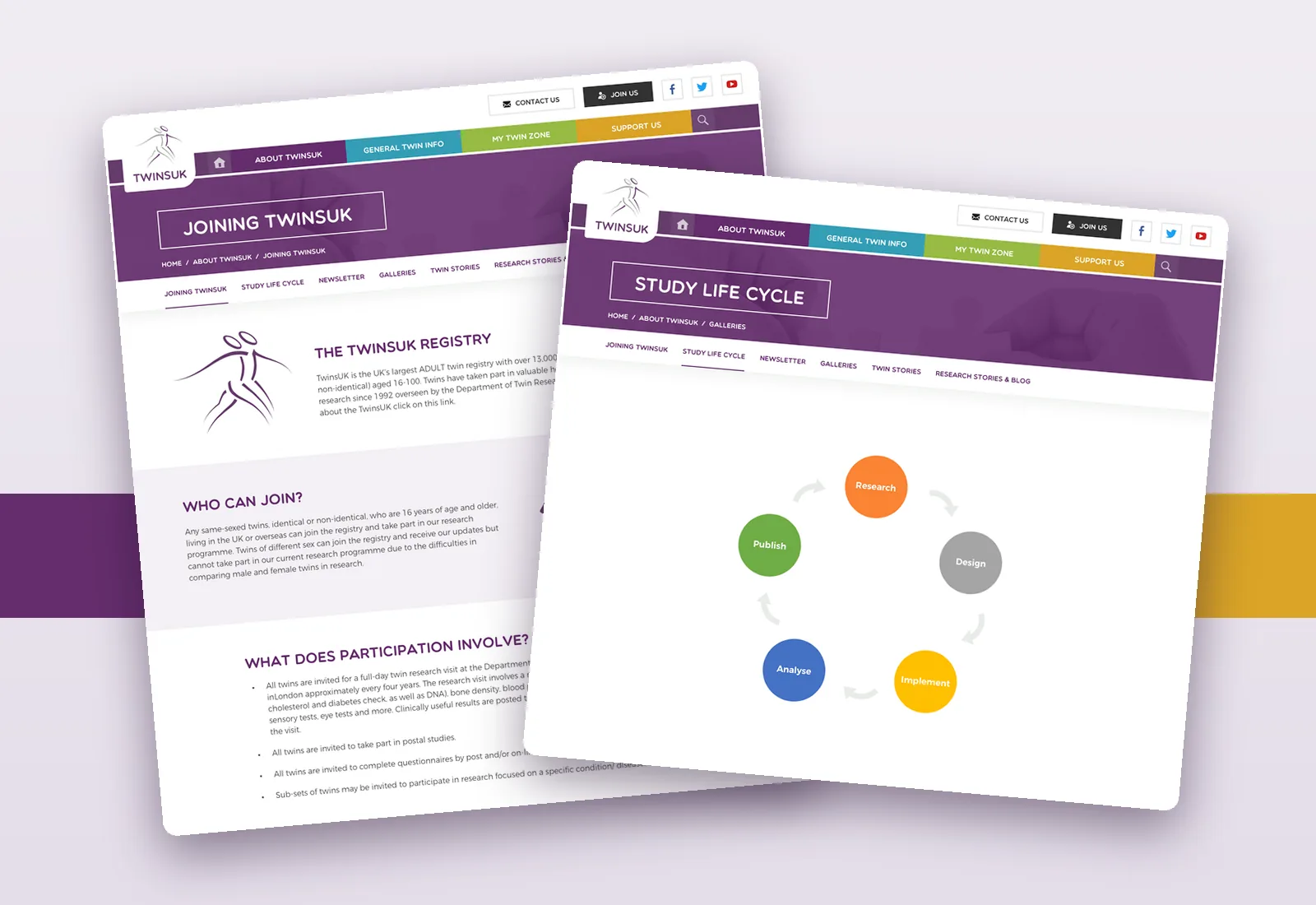
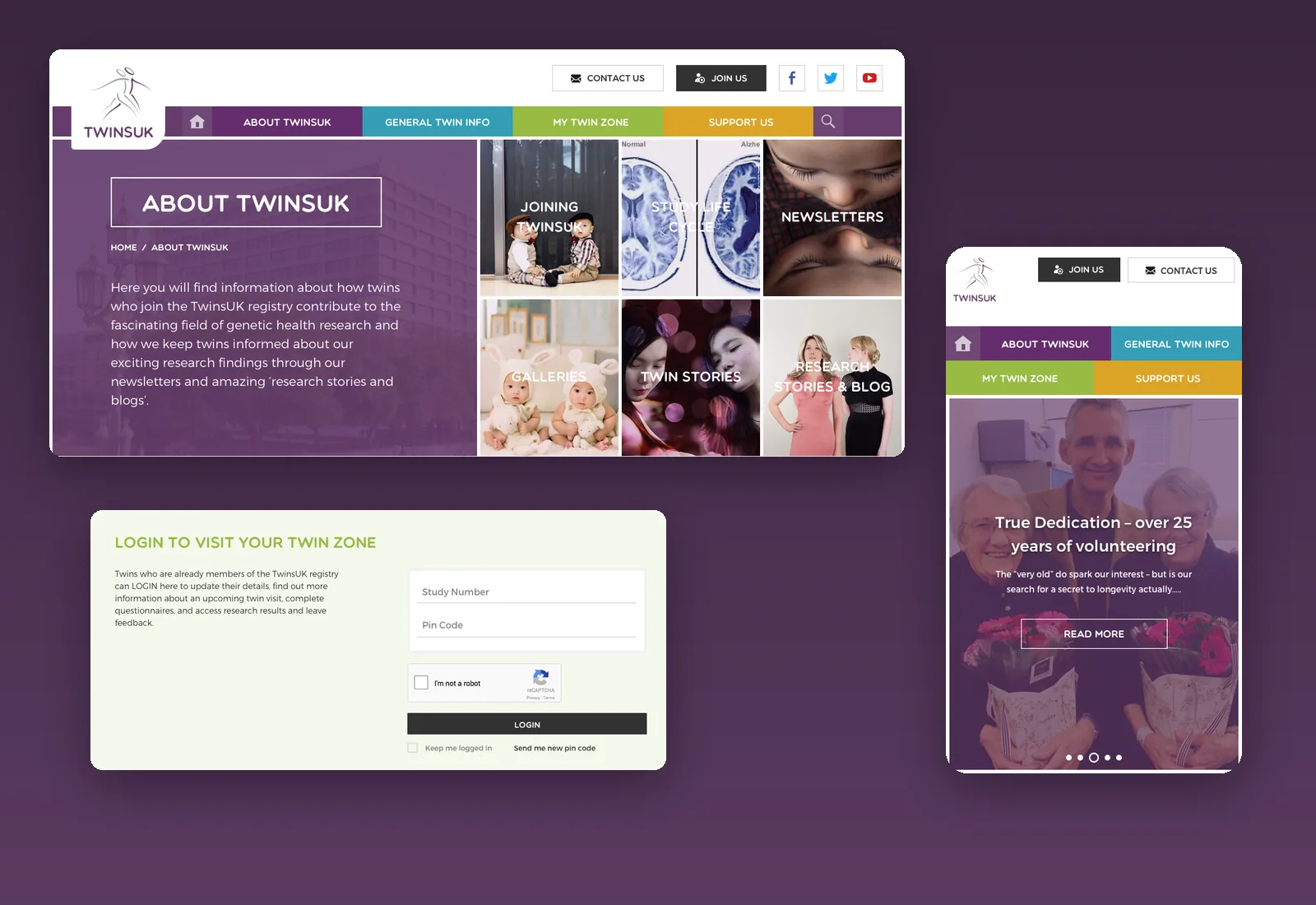
Twin Zone was the research participant portal for the registry's members. A twin signed in with their study number and PIN to update their details, complete questionnaires, see their research results, meet their study team and prepare for a visit. We designed it in 62 screens between September 2016 and May 2017, built it on WordPress, and looked after it from its launch in November 2017 until 2023.
Around the sign-in we wrote the research into pages a volunteer can follow:
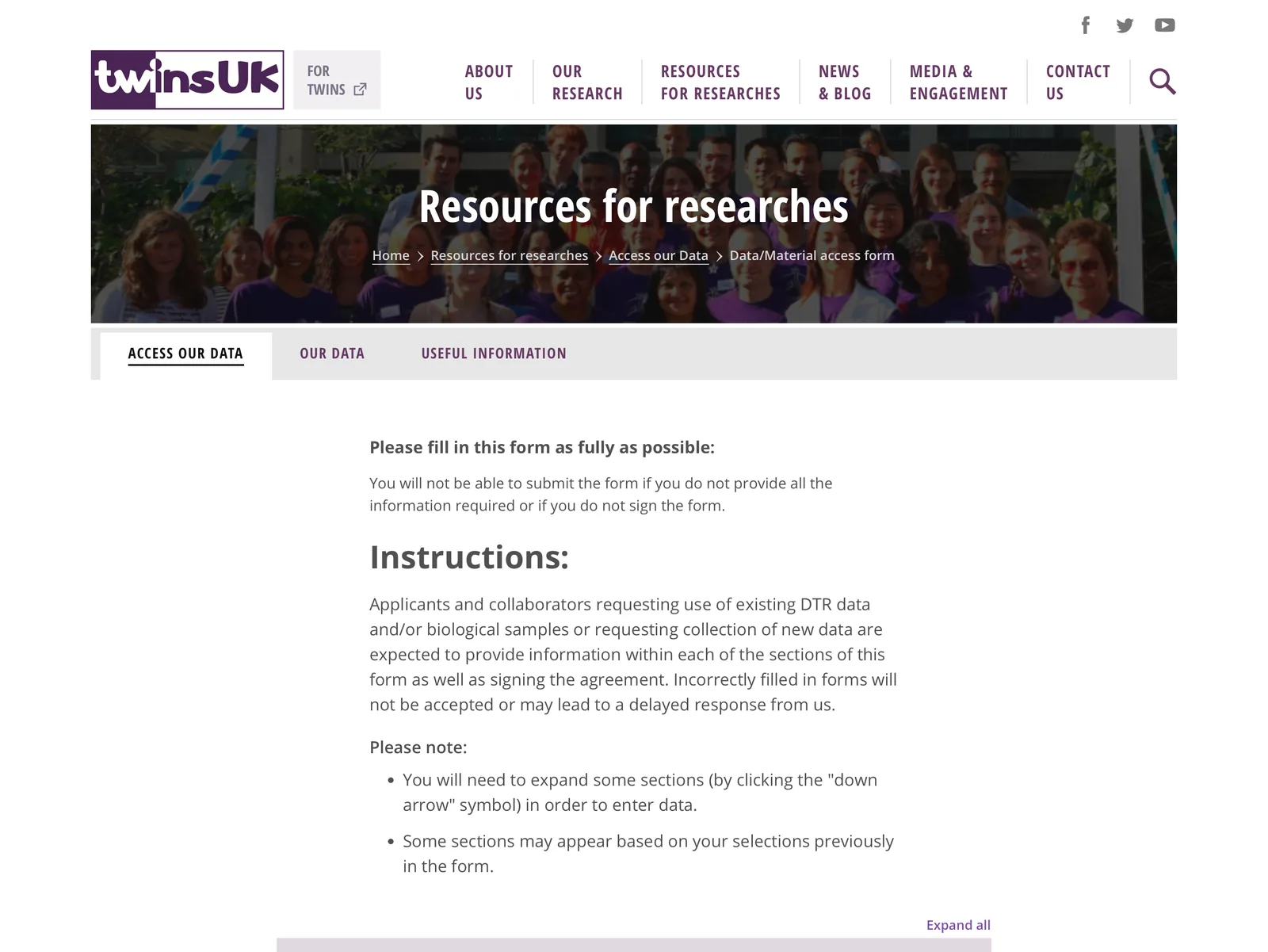
The application moved from forms and email to one system. A researcher opened an account and filled in seven sections, from the applicants and their institution to funding, ethical approval, the data or samples needed and the scientific proposal. The draft saved until it was ready. A dashboard showed every request and where it stood.
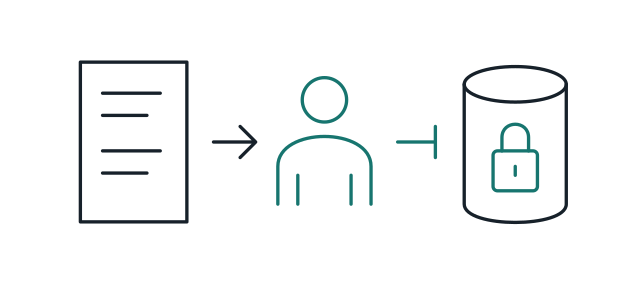
Each application went to the committee for approval, and every decision sent a PDF to the applicant and the data access manager. That PDF was the record. We built it first on WordPress, then rebuilt it as a Laravel application that checks each researcher's ORCID iD, the identifier researchers carry across institutions.
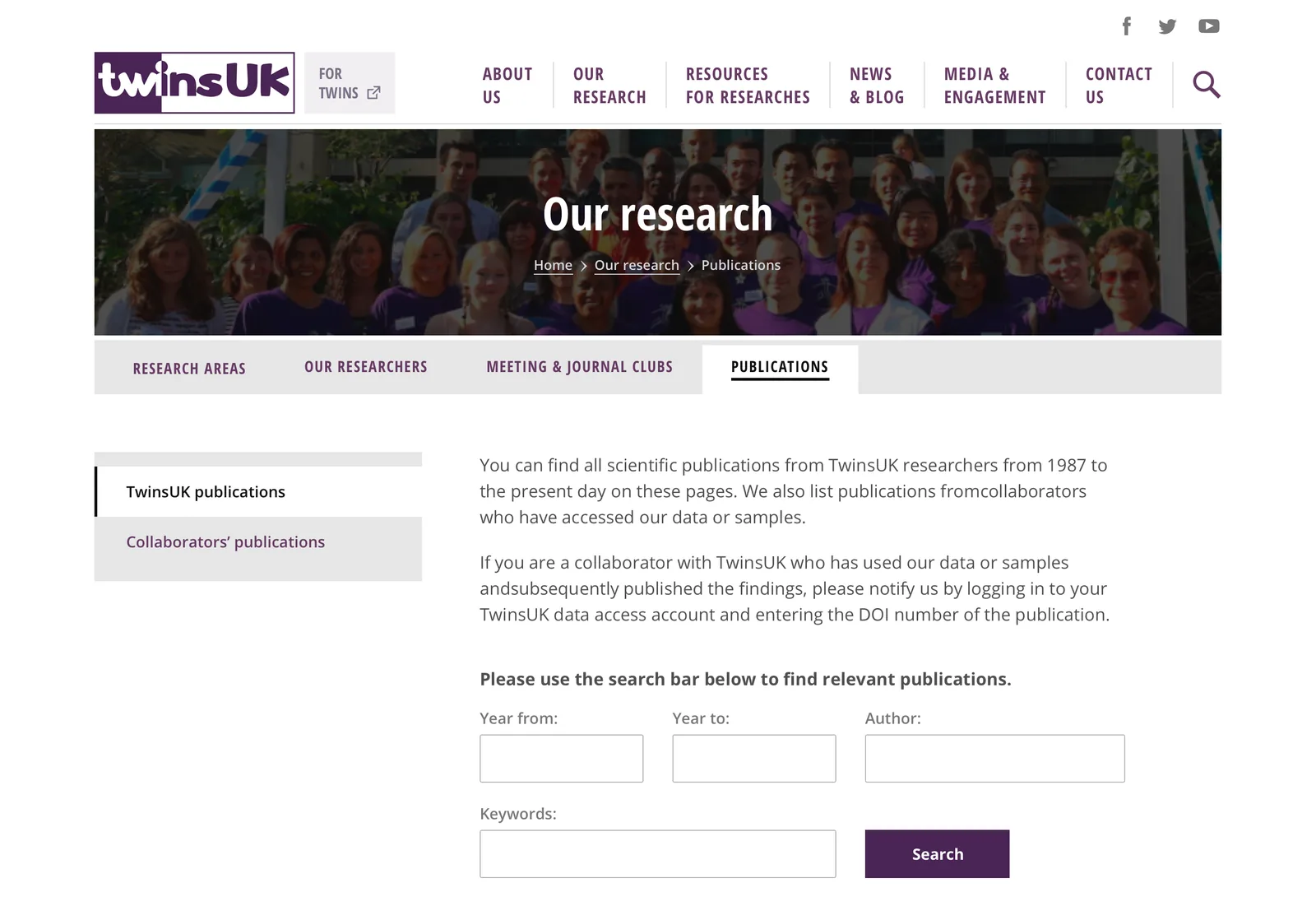
We rebuilt twinsuk.ac.uk, the research site, in 2017 and 2018: 49 screens in two rounds. We built it on WordPress, with its own content types for staff, publications, press releases, jobs, projects and videos.
A researcher could search every publication since 1987 by year, author and keyword, and browse the data the registry holds, including the DietMetab study by metabolite and food type. Twins could register as a pair.
In 2015 we began an app for twin volunteers: a web app, then in 2016 a native iPhone and iPad app in Swift. Twins signed in, took surveys, saw the results as charts, and followed news and events. Staff added participants and published surveys from an admin side.
Both apps were built and tested on our own staging server and were not released. The REST API we wrote for them, 23 endpoints with personal details stored encrypted, went on to serve Twin Zone.
The work ended when we closed our UK chapter, as the registry required a UK-registered company.
TwinsUK also introduced us to TreatOA, a European research consortium coordinated at King's, whose website we built in 2013.
Explore research platforms, WordPress, mobile apps and design.
WordPress platforms for enterprise teams: content structures, migrations, accessibility and integrations.
Product design, user experience, interface design, brand identity and design systems, with the same team carrying the design into the build.
Mobile applications and companion tools, from user experience and interface design to development, integration and release preparation.
A research registry serves volunteers and researchers. The volunteers come first, and every request for their data goes past people and onto the record.
A proposal shows the first three months. A partner's longest engagement, and who owned what in it, shows the years after.
Three running products we changed one part at a time, the signs that a full rewrite is the better call, and five questions to decide it.
After 31 December 2026, PHP 8.2 loses upstream security fixes. Moving to a supported version depends on compatibility, verification and someone owning the change.
Tell us what you are building and where your team needs support.
Discuss your project