
A research consortium's website, built to outlast the grant.
We planned, designed and built the website and members' area for TreatOA, an EU-funded osteoarthritis research programme of eleven institutions.
Eleven institutions, one programme
TreatOA was a European research programme on osteoarthritis, the most common cause of disability in Europe. From 2008 to 2013 it joined ten universities, institutes and companies to King's College London, which coordinated it through the team behind TwinsUK.
The EU funded about 11.9 million euros of its 16.7 million. The work came to us through TwinsUK, our client at King's since 2012.
What the website had to do
A consortium answers to its funder, its members and the public. The site had to explain the research to a newcomer, show each institution's part, publish results, and give members a private place for their tools and reports.
What we did
We planned the structure, wireframed every page type, designed the site and built it as a custom WordPress theme, with the members' area. We also moved the content across from the earlier site.
From brief to five years live
The dates come from the project's task list; the screens are from the Web Archive.
Planned before it was drawn
The brief arrived on 14 June 2013. Eleven days later the wireframes were ready, 19 of them, from the home page to publications, downloads, search and the members' login.
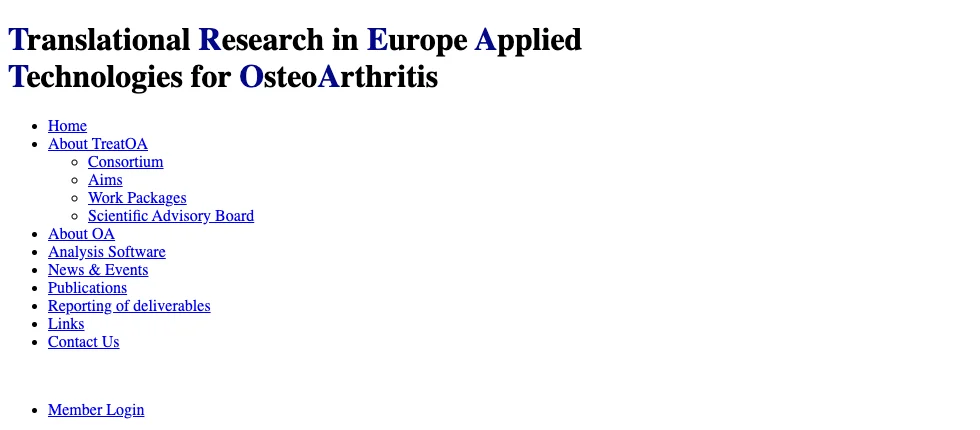
The earlier site in April 2013. The archive kept its text and menu, not its styling. View image full size The programme, page by page
A research programme has its own shape: aims, institutions, work packages and a scientific advisory board. We gave each its place, so a funder, a member or a newcomer finds the part they came for.
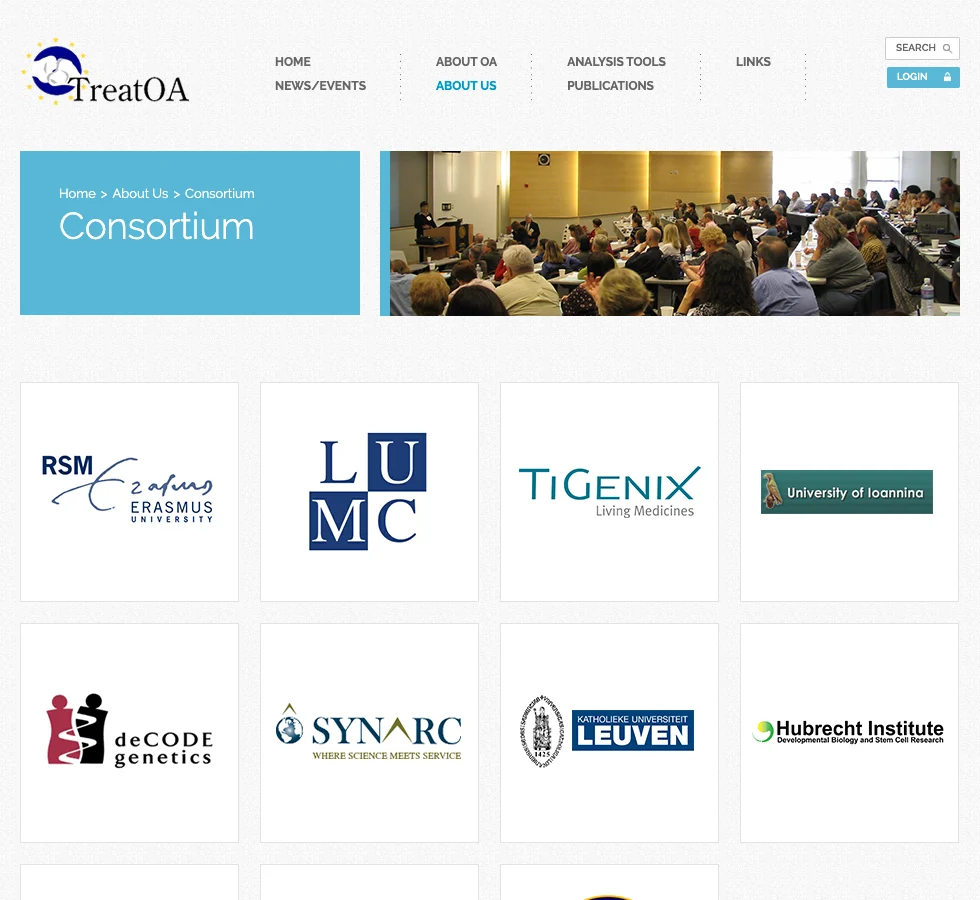
The consortium, institution by institution. View image full size 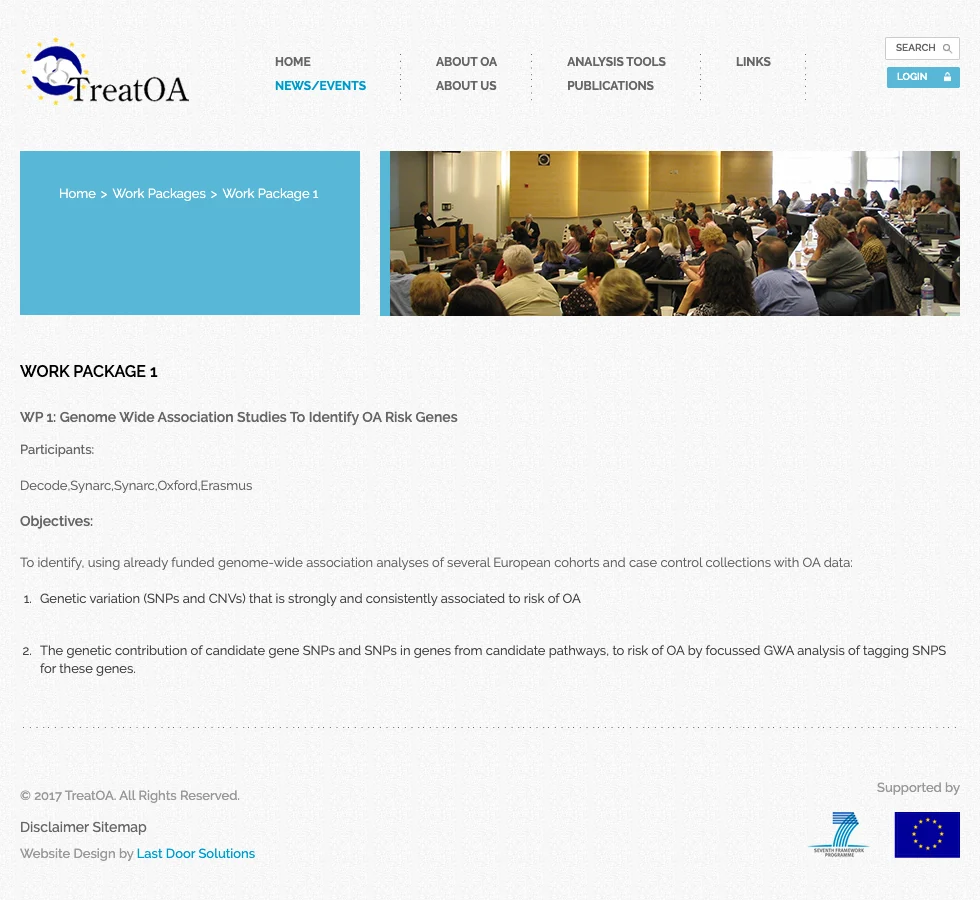
One of eleven work packages, each with its own page. View image full size A members' area for the consortium
Members had their own area behind the login, designed and built in August 2013. It held the analysis software, research results and the reports the programme owed its funder.
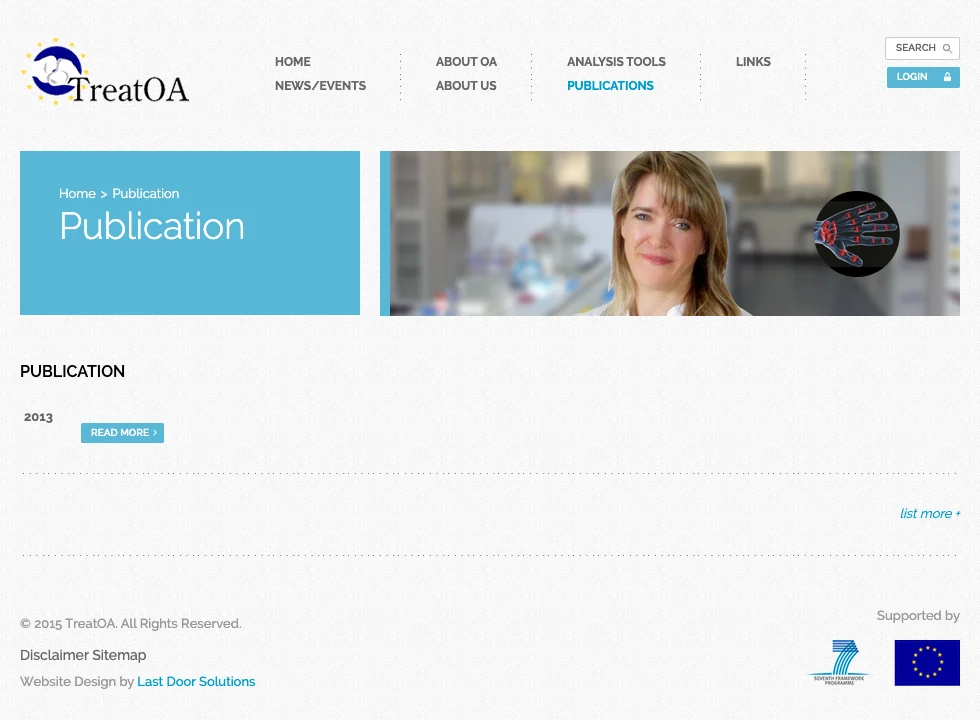
Publications, with our credit in the footer. View image full size Five years after the grant
The grant closed in June 2013. The site we built went live that autumn and the Web Archive holds it, unchanged, in 13 captures from April 2014 to January 2019.
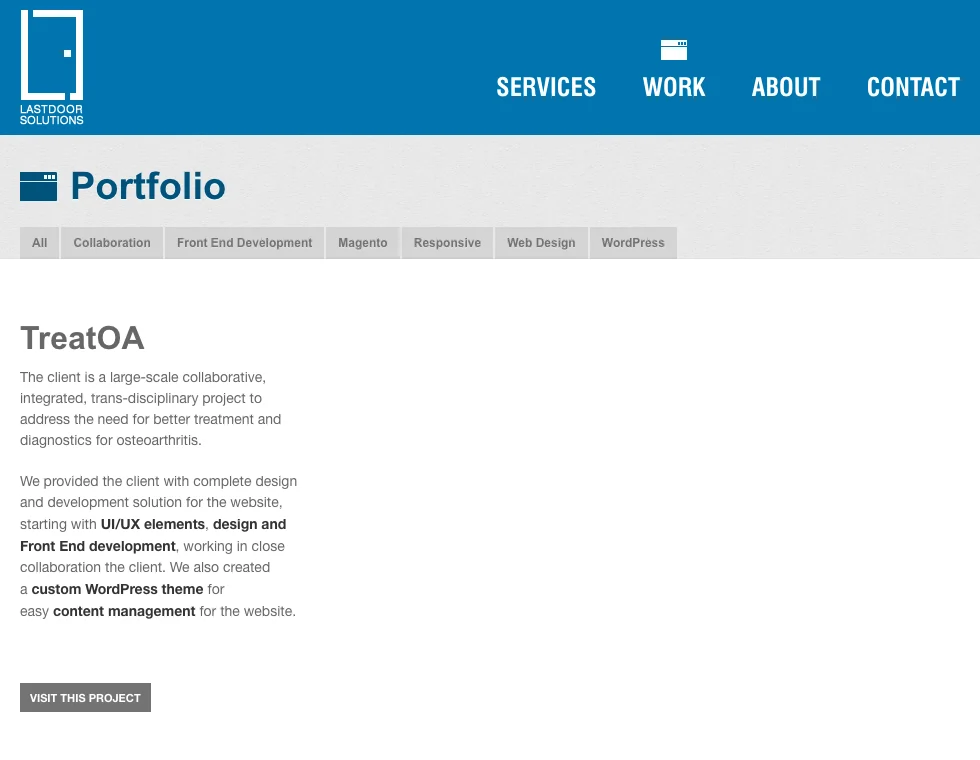
Our portfolio page for the job, January 2016. The archive did not keep its picture. View image full size