Ask for the longest engagement, not the best one
Most software development companies lead with a portfolio of their best launches. A long engagement shows whether they kept turning up after the launch, through budget changes, staff changes and new versions.
Four of our longest:

| Client or partner | Years | What we held |
|---|---|---|
| Anchor Wave, a web agency in Tucson | December 2009 to March 2026 | Building and looking after its clients' websites |
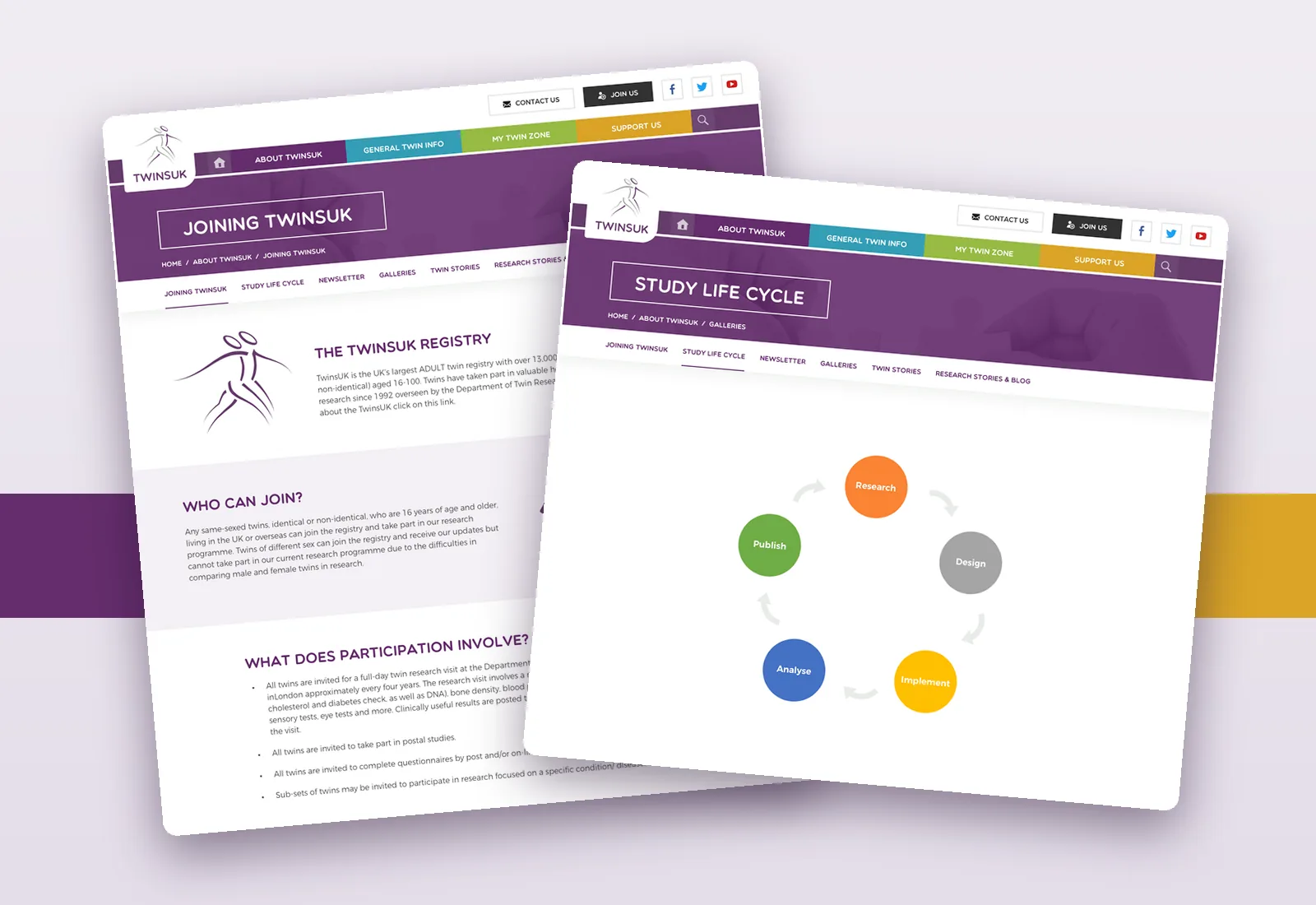
| TwinsUK, King's College London | 2012 to 2023 | Design, build and upkeep of its web tools |
| Highstep Technologies | Since 2015 | Product design and frontend for its enterprise team |
| E11 Group, a US agency | 2017 to 2026 | Engineering and maintenance for its clients' sites |
The number of years matters less than what the partner can say about them. A team that has stayed with one client for a decade can tell you what went wrong in year four and what they changed. Ask for a specific change and how the team handled it.
Ask who owned what
A long engagement survives on a clear split. When both sides think they own the same thing, the work stalls in review. When neither side owns it, it breaks quietly.
In each of ours, the line is clear:
- On the current Highstep project, Highstep owns the backend, infrastructure, DevOps and quality assurance. We own product thinking, user experience, interface design, design systems and frontend engineering.
- Anchor Wave owned strategy, its client relationships and most of the design. We built and looked after the websites.
- E11 Group held its client relationships, strategy and design direction. We contributed engineering and maintenance within the agreed scope.
Ask each software development partner on your list to draw that line for one of their clients. If they cannot say where their part ends, you will find out on your project.
Ask how the way of working changed
No arrangement lasts ten years unchanged. The question is whether the partner changed it on purpose.
With Anchor Wave, the work moved through four arrangements in sixteen years. Jobs came first as tickets in Anchor Wave's own system, then as a project each, then on one shared board. From December 2025 we advised on demand. How that ran on tickets has the counts for each period.
A partner who can describe changes like these, with dates, has watched how the work runs, not only what it produces.
Ask how it ended
Every engagement ends. How it ends says as much as how it ran.
Our work with TwinsUK ended in 2023, when we closed our UK chapter. The registry works with UK-registered companies. We had looked after its members' site since the launch in November 2017. In the last year, we repaired both of its sites for PHP 8.1.
Ask a partner about one engagement that ended. Listen for whether they describe a handover, or a door closing.
Five questions to ask any software development partner
- What is your longest current engagement, and how many years has it run?
- In that engagement, what does your team own, and what does the client own?
- How has the way you work with them changed since the start, and why?
- Tell us about an engagement that ended. What did you hand over?
- Who from that engagement would take our call?
The right partner answers them with dates and names. They work with any development team, including ours, and our consulting page sets out how we work alongside an internal team. The answers to the first three show whether a team has stayed long enough to learn. The last two show whether it would leave well.
You can read how the split worked with Anchor Wave in its story, and with Highstep in the enterprise platform story, which asks for your company details first.
A proposal is a promise about the first three months. A long engagement is the record of every month after.